Siri AI vs Google Gemini: How Apple and Google’s Assistants Differ
Siri AI vs Google Gemini: compare personal context, app actions, ecosystem integration, privacy, availability and what each assistant is designed to do.
Apple and Google are taking different paths toward the same destination: an AI assistant that can understand what you mean and actually help you get things done.
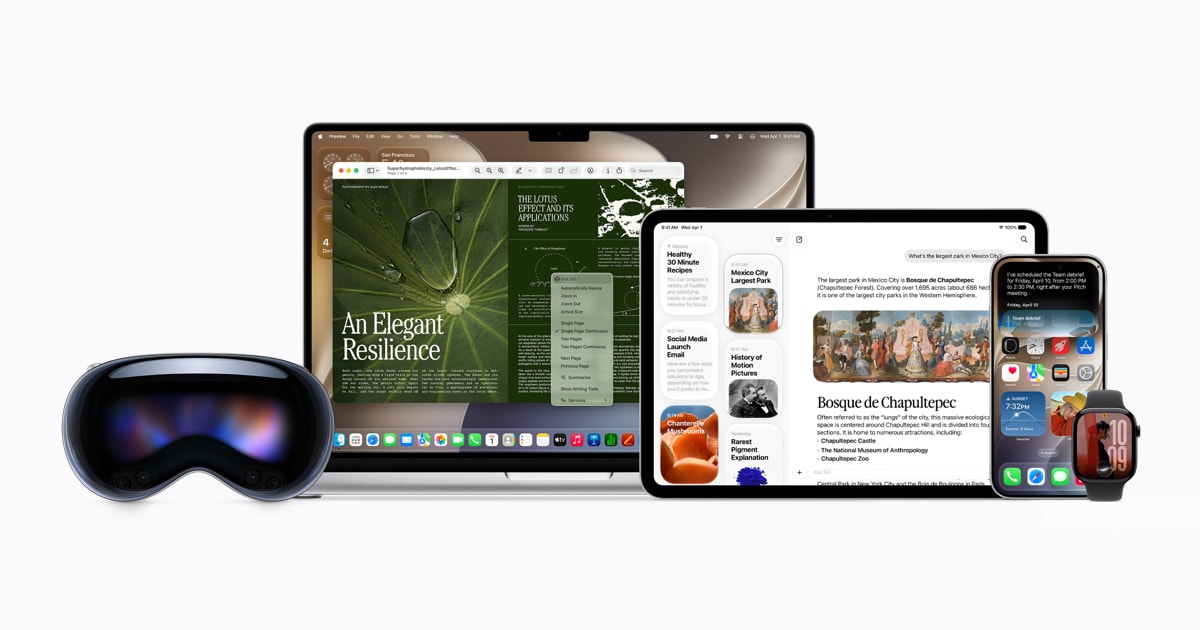
Siri AI is Apple's new, more capable version of Siri, powered by Apple Intelligence and built around personal context and actions across Apple apps.
🎁 Sponsored Blog Offer
Become a Samples Reviewer Now! (Capped)
Enter your information now to see if you qualify for this U.S. Android offer.
Gemini is Google's broader AI assistant ecosystem, deeply connected to Google's search, Android and cloud services, with strength in research and Google-service integration.
Neither is simply “the smarter chatbot,” and this comparison will not crown one. The better choice depends on what ecosystem you use and what you expect an assistant to do — which is exactly what the sections below help you decide.
Siri AI and Gemini are different kinds of assistants
The most important thing to understand is that these products have different centers of gravity. Comparing them feature-by-feature misses the architecture.
Siri AI is an operating-system assistant. It lives in iOS, sees what is on your screen, reaches into your messages, photos and apps, and acts within Apple's controlled environment. Its unit of work is the task on your device.
Gemini is a platform assistant. It spans Android, the web and Google's services, draws on world-scale information retrieval and operates across a far wider surface — at the cost of the deep, uniform OS integration Apple enjoys on its own hardware.
Think of it this way: Siri AI wants to be the hands of your iPhone. Gemini wants to be the brain of your Google life. Most users will be better served by asking which description matches their daily reality than by comparing specification sheets.
Apple ecosystem: Siri AI's home turf
Apple designed Siri AI around its operating systems, and every advantage flows from that integration. Apple says Siri can understand personal context and work across information such as messages, emails and photos — the raw material of daily iPhone life.
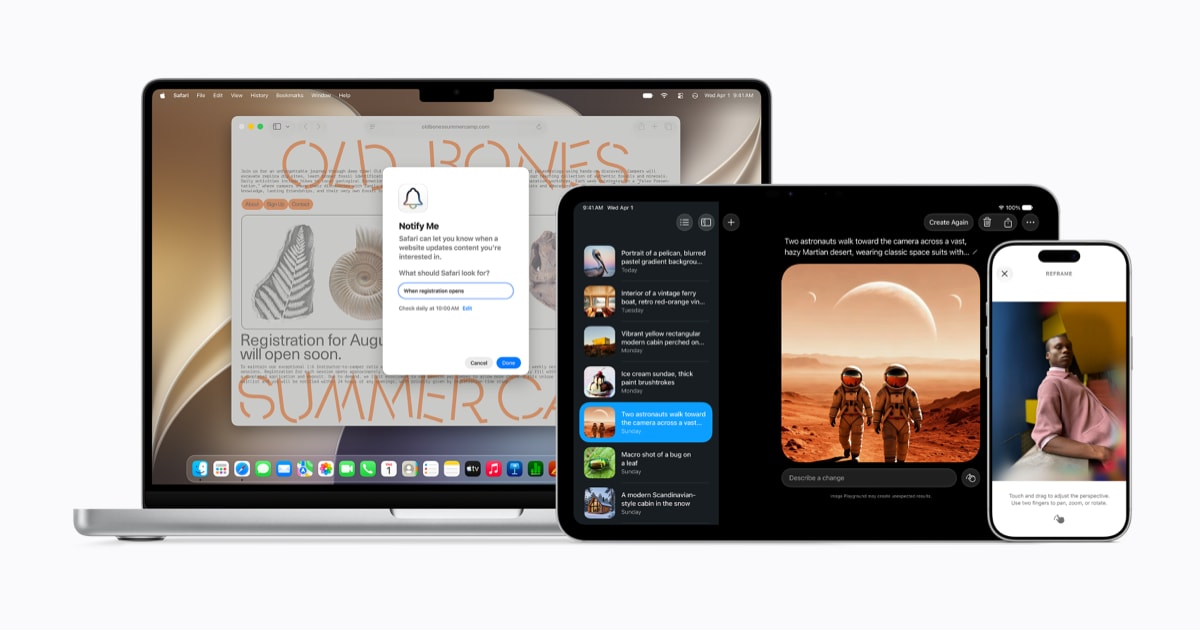
It can also perform actions across apps: finding, drafting, scheduling and chaining steps together without making you the manual router between applications. For background on the system behind this, our Apple Intelligence explainer covers what Apple's AI actually does today.
That gives Siri a strong advantage for someone who already lives on an iPhone, Mac, Apple Watch and other Apple products. The assistant meets you inside apps you already open, with context you never had to provide.
The boundary is equally clear: outside Apple's walls, Siri AI has little to offer. It is not a web researcher, not an Android companion and not a cross-platform utility. Its excellence is deep and narrow by design.
Google ecosystem: Gemini's home turf
Google has enormous experience with search, information retrieval and AI at planetary scale, and Gemini inherits all of it. The assistant draws on the same infrastructure that powers the world's dominant search engine.
Gemini is integrated across Google's ecosystem and Android: Gmail, Maps, Photos, Drive, YouTube and the web itself. For people whose digital lives run on these services, the assistant starts with a home-field advantage no Apple integration can replicate — because the data it needs already lives at Google.
That makes Gemini particularly compelling for research-heavy use. Broad web questions, travel planning across Maps and Gmail, working with documents in Drive, finding that one photo from years ago — these play directly to Google's strengths.
The trade-off mirrors Apple's in reverse: breadth over depth. Gemini reaches everywhere but rarely enjoys the uniform, system-level control Siri AI has inside iOS.
Personal context
This is where the new generation of assistants gets interesting, and where the two philosophies visibly diverge.
A useful assistant should understand context without forcing the user to repeat everything. Apple says Siri AI can use personal context — your messages, emails, photos, calendar — to find information and complete tasks that would be hopelessly ambiguous to an outsider.
Google's version of context is the breadth of its own services: years of your Gmail, Maps history, Photos library and search patterns, combinable in ways no single Apple device can match. Where Apple knows your device deeply, Google knows your cloud history broadly.
Both companies are trying to turn the assistant from a question-answering tool into an interface for getting things done. Apple's context is intimate and local; Google's is expansive and historical. Users uncomfortable with either model should weigh that discomfort seriously — context is power in both directions.
App actions
Answering is table stakes now. Acting is the differentiator, and here the approaches rhyme more than they differ.
Siri AI performs actions across Apple apps and, increasingly, third-party apps that expose their capabilities to the system. The constraint is Apple's garden walls: superb inside, limited outside.
Gemini acts across Google services and Android apps with similar ambitions and a wider service surface. Booking, navigating, drafting, summarizing across Gmail and Docs — the plumbing Google has spent a decade building.
Judge this dimension by your own app inventory, not by demo videos. List the five apps where you spend your time, then ask which assistant can actually do things inside them. The answer is usually decisive within seconds.
Search and information
For general research and broad web information, Gemini's Google heritage is a structural advantage that Apple does not attempt to match. Search-backed answers with fresh web access beat on-device knowledge for anything that changed recently.
Siri AI handles device-local and personal questions better: what is on your screen, in your messages, in your photos. It is the assistant for “my stuff,” while Gemini is the assistant for “the world's stuff.”
Most people need both jobs done, which is why many iPhone users will end up using Siri AI for personal actions and a Google property — app or web — for research. That split is not a failure of either product. It reflects genuinely different strengths.
Be wary of benchmark-based claims about which is “smarter.” Published AI benchmarks measure narrow capabilities under lab conditions; none captures “found my boarding pass and added it to my calendar while I was driving” reliability, which is what daily usefulness actually consists of.
Privacy and data controls
Apple's AI strategy emphasizes on-device processing and Private Cloud Compute, an architecture designed so that personal data is neither stored by nor accessible to Apple during server-side work.
Google also operates extensive privacy and security systems, and Gemini benefits from Google's security infrastructure. But the companies' data philosophies differ: Apple's model minimizes what leaves your control, while Google's model has historically improved by learning across aggregated user interactions.
For consumers, the practical question is not simply which company says “privacy” more often. It is which services each assistant can access, what information is retained and for how long, how personalization uses your data, what controls you actually have — and whether you have verified the answers in settings rather than marketing.
Users with the highest privacy sensitivity should prefer architectures that keep data local by default and should still practice permission hygiene everywhere. No architecture protects data you hand out carelessly.
Device availability
Siri AI runs on recent Apple hardware — newer iPhones, iPads, Macs and related devices — with feature availability varying by language and region. If you are outside the supported set, the comparison is moot until you upgrade.
Gemini spans Android flagships, iOS as an app, and the web, giving it far broader device reach — an iPhone user can use Gemini today while no Android user can use Siri AI. That asymmetry makes Gemini the pragmatic household choice on mixed platforms even where Siri AI is individually stronger on Apple hardware.
Feature rollouts add another wrinkle: capabilities like Apple's health AI arrive on different schedules by region (see our Apple Health AI guide), and the iOS version on your device decides which Siri AI features you actually get (see our iOS 27 Siri AI guide).
Which is better for Apple users?
For Apple users, Siri AI is usually the more natural primary assistant because it is deeply integrated into iOS and improves with every Apple service you add. Keep Gemini installed anyway — as an app, free — for the research and Google-service tasks where it is structurally stronger, unless your life actually runs on Google services, in which case follow the data, not the logo.
Which is better for Android and Google users?
For Android and Google users, Gemini has an obvious ecosystem advantage that Siri AI cannot contest — Siri AI does not run on your devices at all. Within the Google world, Gemini's integration trajectory makes it the default choice for most users, with third-party assistants serving specialized needs.
Where neither is perfect
Both assistants share the weaknesses of the current generation. They hallucinate — confidently stating falsehoods — and neither should be trusted for medical, legal or financial decisions without independent verification.
Both struggle with multi-step reliability: each additional action in a chain multiplies the chance something goes subtly wrong, which is why confirmations and audit trails matter more than raw capability — and both evolve fast enough that today's comparison deserves a yearly revisit rather than permanent-verdict treatment.
Frequently asked questions
Q: Is Siri AI better than Gemini? A: Neither is universally better. Siri AI wins on Apple-device integration and personal actions; Gemini wins on web research, Google-service integration and cross-platform reach. Match the assistant to your ecosystem.
Q: Does Siri AI use Apple Intelligence? A: Yes. Siri AI is powered by Apple Intelligence — on-device models plus Private Cloud Compute — which is what enables its personal context and cross-app actions.
Q: Is Gemini available on iPhone? A: Yes, as an app and on the web. It cannot match Siri AI's system-level integration on iOS, but it works well for research and Google-service tasks.
Q: Which AI assistant is better for privacy? A: Apple's architecture keeps more processing on-device and is designed to exclude Apple access server-side. But verify actual settings and practice permission hygiene with both — architecture helps only if you use the controls.
Q: Can Siri AI perform actions across apps? A: Yes, on supported devices — finding information across messages, mail and photos, and completing multi-step tasks across apps. Third-party coverage is still growing.